What is the best demand planning software?
The best demand planning software depends on your organization’s size, complexity, and planning needs. Mid-market manufacturers and distributors often evaluate platforms like SAFIO, Netstock, DemandCaster, StockIQ, and Atlas Planning based on flexibility, analytics, usability, and implementation speed.
What features should demand planning software include?
Important features include forecasting, scenario planning, analytics, inventory alignment, planner usability, and the ability to combine data from multiple systems.
Can an ERP system handle demand planning?
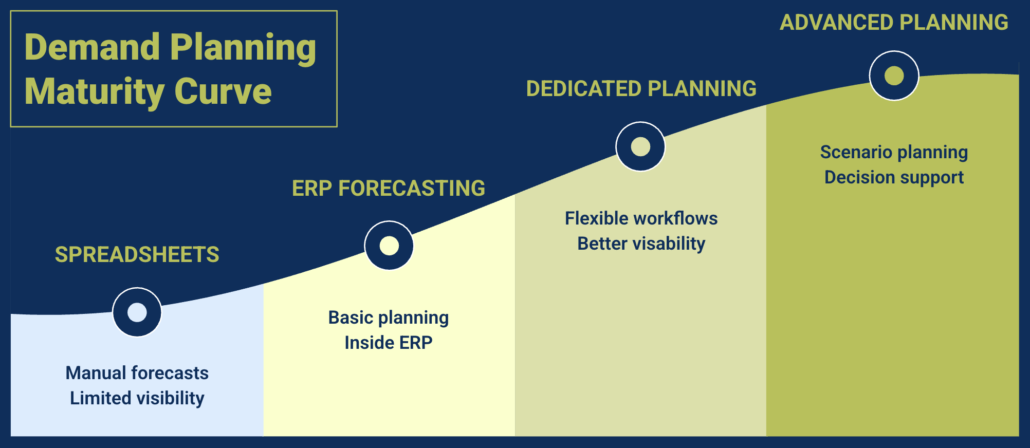
ERP systems often include basic forecasting tools, but many companies move to dedicated demand planning software when they need more flexibility, better visibility, and stronger decision support.
What is the difference between demand planning and forecasting?
Demand forecasting predicts future demand using historical data and statistical models. Demand planning includes forecasting plus collaboration, adjustments, and alignment with inventory, production, and supply chain decisions.
How should mid-market companies choose demand planning software?
Mid-market companies should evaluate demand planning software based on factors such as forecasting accuracy, analytics and visibility, ease of use, flexibility, and integration with existing systems. They should also consider implementation time and how easily planners can adopt the tool in real-world workflows without unnecessary complexity.
Is demand planning software only for large enterprises?
No. Many mid-market manufacturers and distributors use demand planning software to move beyond spreadsheets or basic ERP forecasting tools while avoiding the complexity of large enterprise planning systems.
How long does it take to implement demand planning software?
Implementation timelines vary depending on the platform and complexity, but many modern demand planning tools can be deployed in weeks. More complex or enterprise systems may take several months, especially if they require extensive process changes or integrations.
When does demand planning become a competitive advantage?
Demand planning becomes a competitive advantage when companies move beyond basic forecasting and start using planning to make better decisions across inventory, production, and supply chain operations. With better visibility, scenario planning, and alignment across teams, organizations can respond faster to changes in demand and operate more efficiently than competitors.
What makes modern demand planning software different from traditional tools?
Modern demand planning software goes beyond basic forecasting by combining analytics, visibility, and scenario planning into a single platform. Unlike traditional tools or ERP-based systems, modern platforms are designed for planners, integrate multiple data sources, and support more flexible, decision-driven workflows.