What makes SAFIO different from traditional demand planning software?
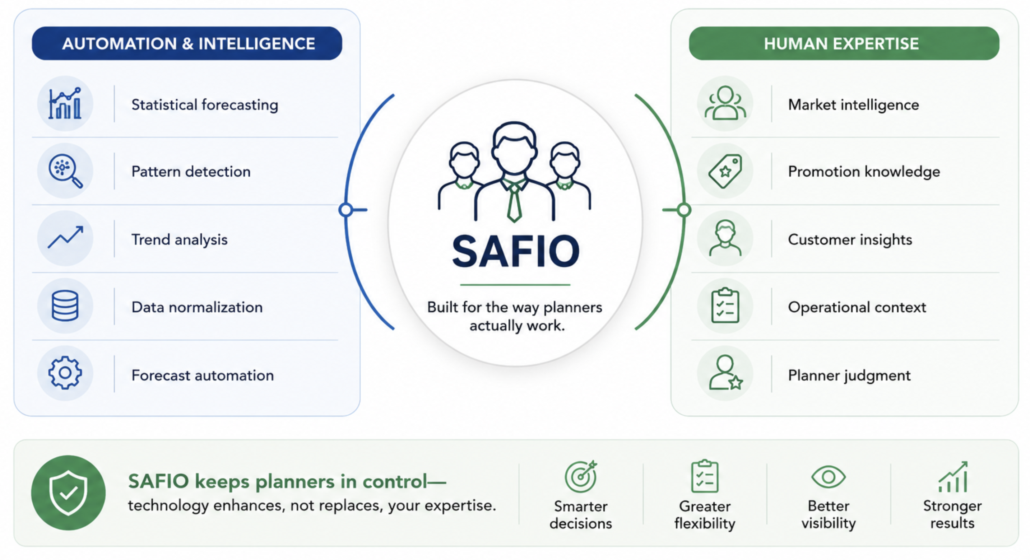
SAFIO was built by experienced planners who understand that successful forecasting requires more than automation alone. Unlike rigid forecasting systems, SAFIO combines intelligent demand planning technology with real-world planner flexibility, allowing teams to adjust forecasts based on promotions, market changes, customer behavior, and operational insight.
Does SAFIO support multi-channel forecasting?
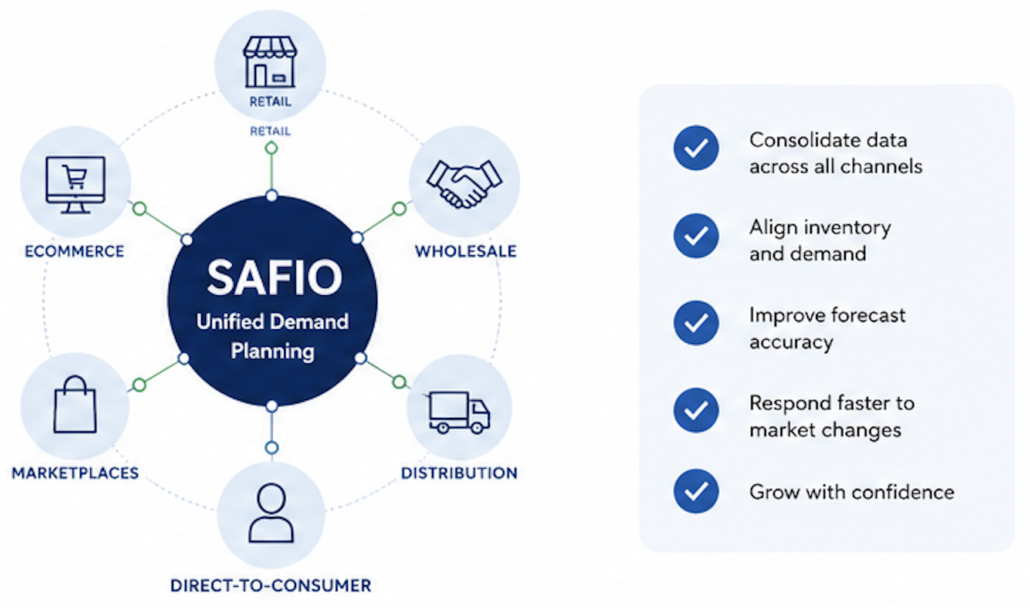
Yes. SAFIO helps businesses forecast demand across retail, eCommerce, wholesale, distribution, marketplaces, direct-to-consumer channels, and more — all within a single planning environment. This gives organizations centralized visibility into inventory, demand, and operational performance across every sales channel.
Can planners manually adjust forecasts in SAFIO?
Absolutely. SAFIO was designed to keep planners in control. While the platform provides advanced forecasting intelligence and automation, planners can easily make manual adjustments based on real-world business conditions such as promotions, supply disruptions, customer demand shifts, or sales team insight.
How does SAFIO help improve inventory optimization?
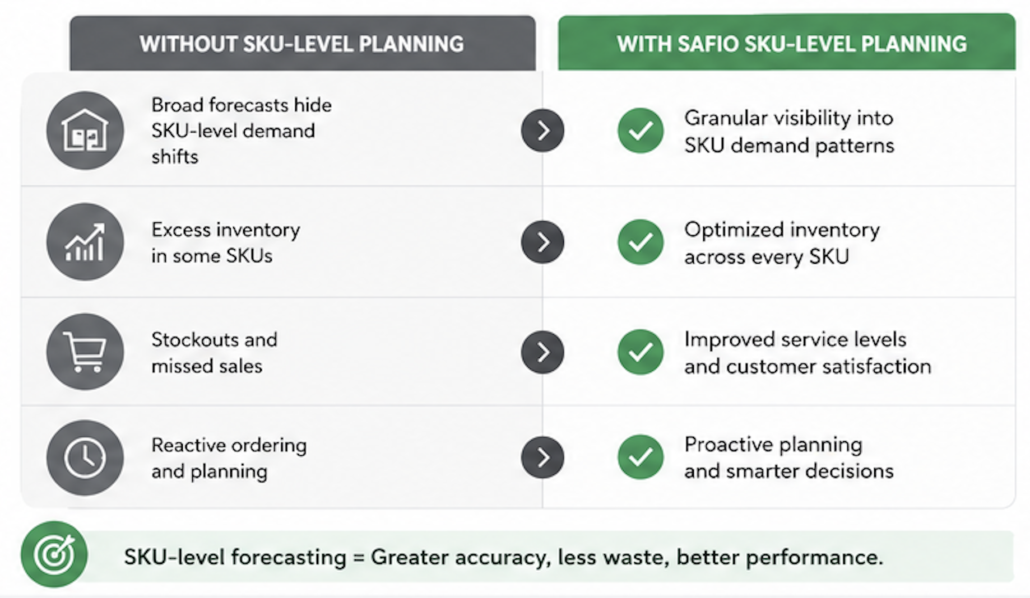
SAFIO improves inventory optimization by providing accurate SKU-level forecasting, better operational visibility, and proactive demand planning tools. Businesses can reduce excess inventory, minimize stockouts, improve service levels, and make smarter replenishment decisions across locations and channels.
Is SAFIO designed for manufacturers, distributors, and retailers?
Yes. SAFIO supports a wide range of industries and operational models, including manufacturers, distributors, wholesalers, retailers, and multi-channel businesses. The platform is especially valuable for organizations managing complex inventory, multiple sales channels, seasonal demand, or large SKU counts.
Does SAFIO support collaborative forecasting?
Yes. SAFIO enables collaboration between planners, sales teams, operations, purchasing, and leadership teams. By incorporating sales insight, customer feedback, promotional activity, and market intelligence into the forecasting process, businesses can improve forecast accuracy and organizational alignment.
How granular is forecasting within SAFIO?
SAFIO forecasts at the SKU level, giving planners detailed visibility across products, locations, customers, and channels. This granular approach helps businesses identify demand trends earlier and make more precise inventory and replenishment decisions.
Can SAFIO help businesses respond to changing market conditions?
Yes. SAFIO’s flexible forecasting and scenario planning capabilities help businesses prepare for uncertainty, evaluate multiple demand outcomes, and respond faster to changing customer behavior, supply chain disruptions, seasonality shifts, and market trends.
Does SAFIO replace demand planners with AI or automation?
No. SAFIO is designed to support planners — not replace them. The platform combines forecasting intelligence with human expertise, allowing experienced planners to apply operational knowledge and business context where it matters most.
What kind of support does SAFIO provide after implementation?
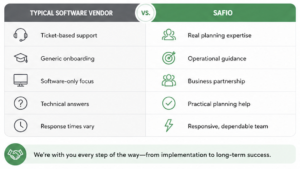
SAFIO provides ongoing support backed by real planning expertise. Customers work with a responsive team that understands forecasting, inventory management, replenishment planning, and operational workflows — not just software troubleshooting.
How quickly can businesses start improving forecast accuracy with SAFIO?
Many businesses begin improving visibility and forecasting consistency shortly after implementation. Because SAFIO is designed around real operational workflows, teams can quickly identify inventory risks, demand trends, and planning opportunities that may have been hidden in spreadsheets or disconnected systems.
Can SAFIO support seasonal or highly volatile businesses?
Yes. SAFIO is well-suited for businesses with seasonal demand patterns, promotional spikes, rapidly changing customer behavior, or volatile supply chains. Flexible forecasting models and scenario planning help teams proactively prepare for demand variability.