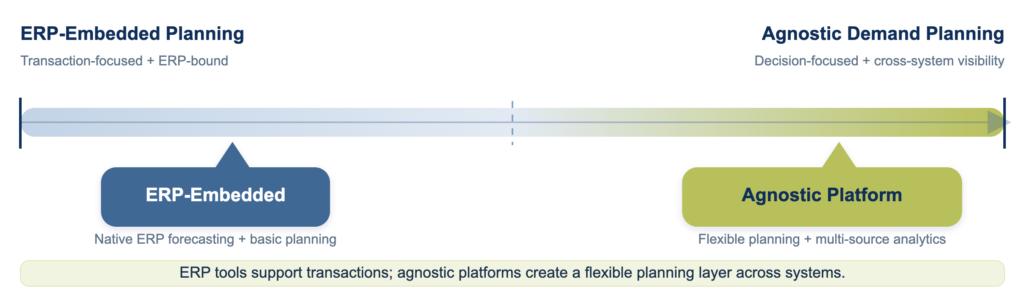
What is ERP-embedded demand planning?
ERP-embedded demand planning refers to forecasting and planning tools built into ERP systems. These tools are often convenient because they are connected to transactional data, but they may be limited in flexibility and advanced planning functionality.
What is agnostic demand planning software?
Agnostic demand planning software is a standalone planning platform that can integrate with multiple systems, including ERP, CRM, spreadsheets, and external data sources.
When should a company move beyond ERP forecasting?
Companies often move beyond ERP forecasting when they need better visibility, more flexible workflows, scenario planning, or a planning process that combines data from multiple systems.
Is ERP forecasting enough for demand planning?
ERP forecasting may be enough for basic needs, but many organizations outgrow it as demand patterns, channels, products, or planning requirements become more complex.
Why do companies choose agnostic demand planning platforms?
Companies choose agnostic platforms when they need a dedicated planning layer that supports better analytics, cross-system visibility, scenario planning, and planner-driven decision-making.
Why do companies outgrow ERP forecasting tools?
Companies often outgrow ERP forecasting tools as their planning needs become more complex and demand becomes more variable across products, channels, and locations. ERP-based tools are typically limited to internal data, basic forecasting methods, and fixed workflows, and were not designed for today’s more dynamic supply chain environments. As organizations need better visibility, scenario planning, and the ability to combine multiple data sources, they often move to dedicated demand planning platforms.
What makes modern demand planning software different from traditional tools?
Modern demand planning software goes beyond basic forecasting by combining analytics, visibility, and scenario planning into a single platform. Unlike traditional tools or ERP-based systems, modern platforms are designed for planners, integrate multiple data sources, and support more flexible, decision-driven workflows.